


Life at RAF Blyton was defined by its role as a "Heavy Conversion Unit" (HCU), where aircrews transitioned from smaller twin-engine planes to the massive four-engine bombers that would take them over Germany. The station was notoriously grim, earning the nicknames "Bloody Blyton" or "Muddy Blyton" from the crews who lived there.
Daily Life: "The Sticks and the Mud" For the young men of the RAF, RCAF (Canada), and RAAF (Australia), life at Blyton was a mixture of extreme boredom, physical discomfort, and high-stakes training.
Accommodation: Personnel lived in Nissen huts (corrugated iron semicircles) that were freezing in the winter and damp year-round. Heating was provided by a single pot-bellied stove in the center of the hut, and coal was often strictly rationed.
The Mud: Because the airfield was built on a clay bed, it was perpetually waterlogged. Airmen frequently wrote home about the "unbelievable" amount of mud they had to trek through just to get to the mess hall or their aircraft.
Isolation: The station was "right out in the sticks." To find any entertainment, airmen had to take a rare bus or cycle to Gainsborough or Retford. Many spent their nights playing cards, listening to the "Dick Barton" series on the radio, or writing letters home by candlelight.
Food & Water: Water was often cold, making washing difficult. The mess hall served standard wartime rations, though Canadian and Australian crews often complained about the lack of "proper" coffee or steaks compared to what they were used to back home.
The Aircraft: The "Heavy" Workhorses, Blyton was home to some of the most iconic aircraft of the war, but in a very specific context: training. The danger of training, While Blyton was a training base, it was far from safe. In fact, 1662 HCU lost over 50 aircraft in accidents during its time at the station.
Inexperience: New crews were learning to fly 30-ton bombers at night, often in terrible Lincolnshire weather.
Engine Failure: Because the planes were often older models with high flight hours, mechanical failures were common.
The "Circuit": Much of the daily flying consisted of "circuits and bumps" (takeoffs and landings), which were the most dangerous phases of flight. Local farmers often complained about aircraft crashing into their fields.
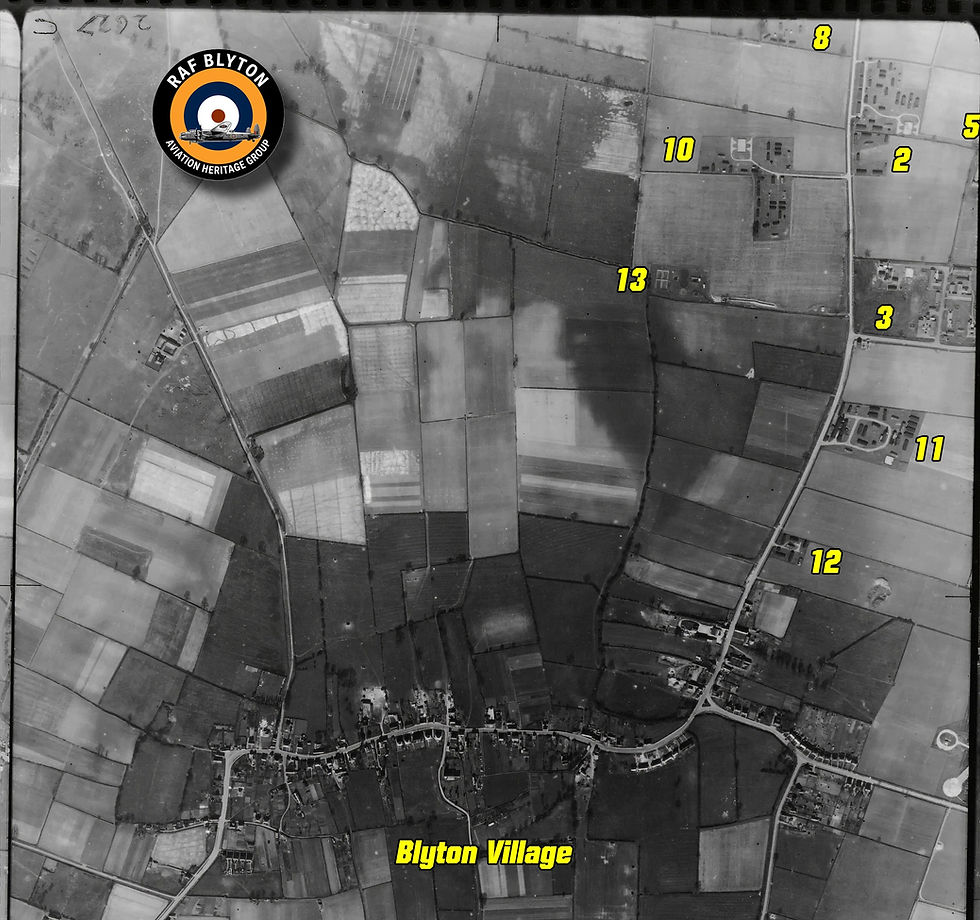
Wartime Photograph showing some of the west side dispersed accommodation sites for all ranks and officers. The original main road layout was also different to the modern A159 which now goes through site No 3 and 5

Typical wartime Nissen hut layout, note the coal stove in the middle
RAF Blyton Dispersed Communal Sites
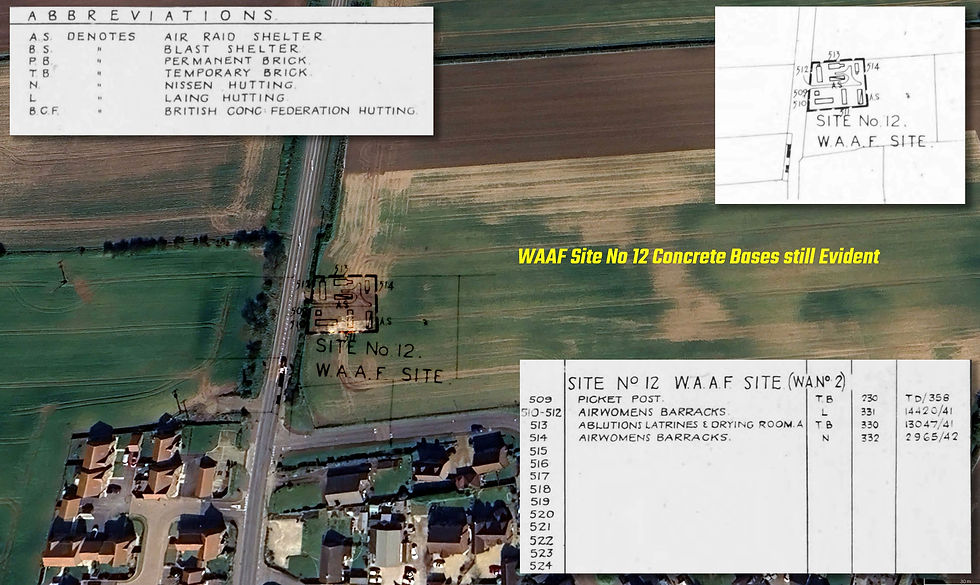
The following overlays explore the off‑base communal sites that once housed all ranks and officers. Across these areas, you can trace the outlines of key buildings brick and Nissen hut constructions alongside latrines and washing facilities that supported daily life.
Site No.2 stands out with its remarkable infrastructure: a gymnasium, barbers, tailors, shoemaker’s shop, squash courts, and the Commanding Officer’s quarters. The station cinema was also located here, positioned for convenient access by senior officers.
Site No.5, bisected by the A159 road, shows little surviving evidence today.
The images offer a fascinating glimpse into the amenities and community spaces that once sustained RAF Blyton personnel. Though now lost to history, these overlays reconnect us with the everyday lives behind the operations.



.jpg)


